Our Science Intent
Children will be given a fun, engaging, high quality science education which encourages pupils to develop their natural curiosity, creating enquiry-based learners.
Teachers will ensure that all children are exposed to high quality teaching and learning experiences. These will hook the children’s interest,enabling them to develop a sense of excitement and curiosity about natural phenomena. They will be encouraged to ask questions about the world around them and work scientifically to further their conceptual understanding and scientific knowledge.
Children will be encouraged to understand how science can be used to explain what is occurring, predict how things will behave, and analyse causes. It will provide opportunities for the critical evaluation of evidence and rational explanation of scientific phenomena as well as opportunity to apply their mathematical knowledge to their understanding of science, including collecting, presenting and analysing data. Children will be immersed in key scientific vocabulary, which supports in the acquisition of scientific knowledge and understanding.
Implementation
We deliver Science through tailored and differentiated planning directly from the National Curriculum. We teach science separately as a core subject at least 1 hour per week.
We tailor the National Curriculum to meet the needs of our children.
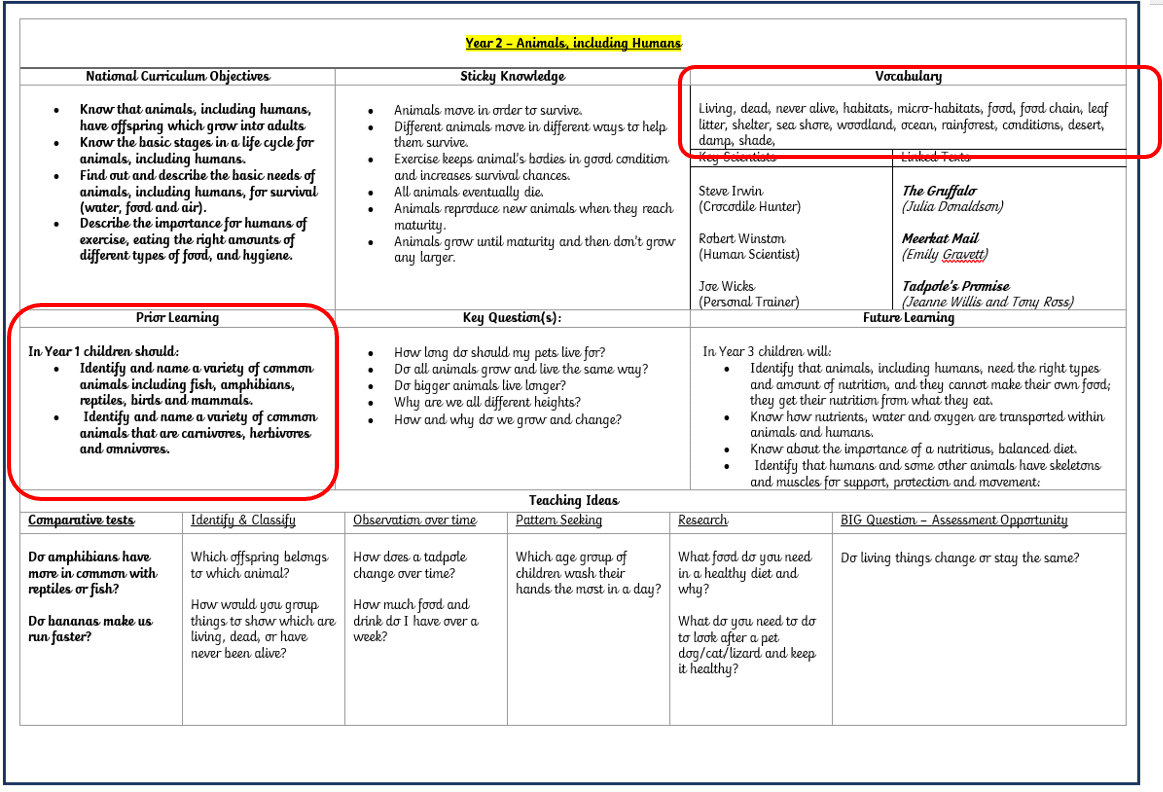
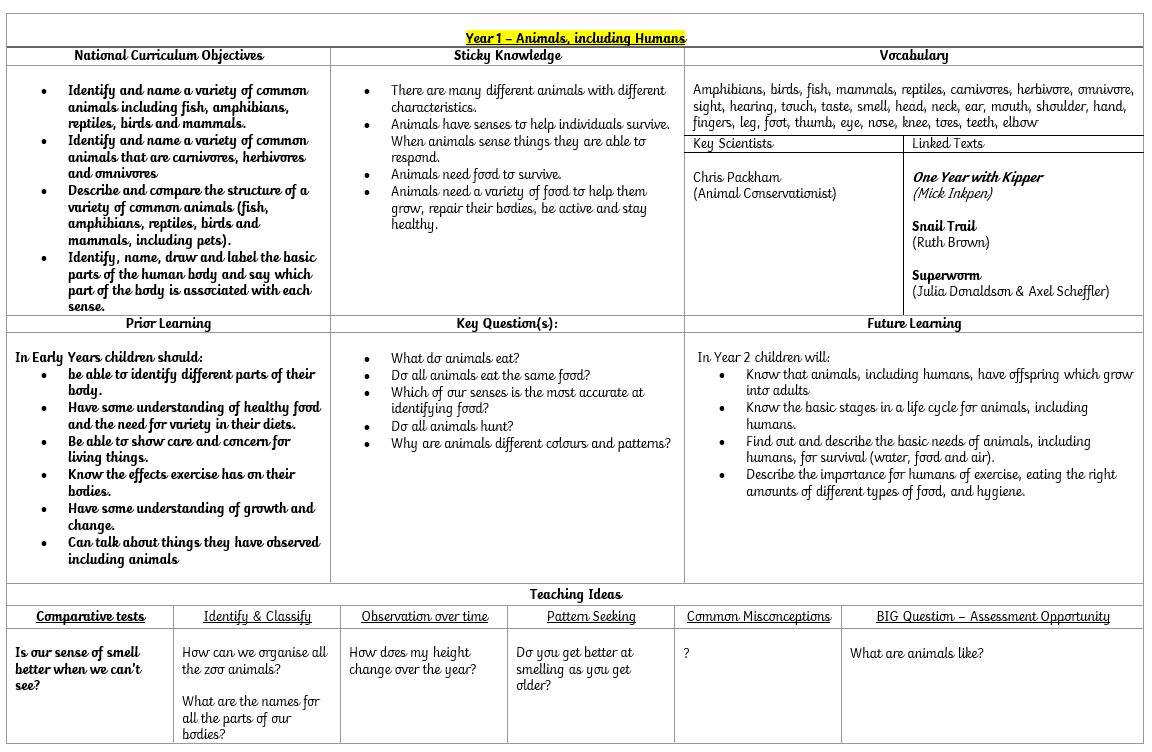
We use Word Aware within our lessons to teach subject specific vocabulary and incorporate reading and vocabulary through our lessons. We have progression documents for each topic within science, which teachers use to ensure prior learning is revisited and teachers know the future learning for that subject. We want to grow curious scientists who are able to have time to find answers to questions! We share STEM careers and possibilities throughout our lessons!
EYFS
Our Nursery and Reception class integrate science through their topics. Some topics include, life cycles, humans, animals and changing states.
Science Curriculum Overview
Our science curriculum develops curiosity, knowledge and a love of learning through engaging and progressive topics across each year group.
Year 1
- Materials
- Working Scientifically
- Animals (Including Humans)
- Plants
- Seasonal Changes
Year 2
- Animals (Including Humans)
- Living Things & Habitats
- Materials
- Plants
- Working Scientifically
Year 3
- Light & Shadows
- Animals (Including Humans)
- Forces & Magnets
- Rocks & Fossils
- Plants
- Working Scientifically
Year 4
- States of Matter
- Teeth & Digestion
- Living Things & Habitats
- Electricity
- Sound
- Working Scientifically
Year 5
- Materials
- Forces & Magnets
- Life Cycles
- Keeping Healthy
- Earth & Space
- Working Scientifically
Year 6
- Animals (Including Humans)
- Electricity
- Evolution
- Light
- Classification
- Working Scientifically